 A new study published Nov. 4, 2019, in the journal JAMA Internal Medicine details the first comprehensive look across the scientific literature at the role of mind-body therapies in addressing opioid-treated pain.
The researchers found that certain mind-body therapies can reduce pain, as well as reduce opioid use, among patients treated with prescription opioids.
These findings are critical for medical and behavioral health professionals as they work with patients to determine the best and most effective treatments for pain.”
Eric Garland, lead author on the study explained that mind-body therapies focus on changing behavior and the function of the brain with the goal of improving quality of life and health.
Mind-body therapies include clinical use of meditation/mindfulness, hypnosis, relaxation, guided imagery, therapeutic suggestion and cognitive-behavioral therapy.
The researchers examined over 4,200 articles to identify 60 previously published randomized controlled trials on psychologically oriented mind-body therapies for opioid-treated pain.
The randomized controlled trials included in the study involved more than 6,400 study participants.
The research team looked at the type of pain experienced by the study participants, the type of mind-body therapy used and its effect on the severity of pain and the use or misuse of opioids.
They found that meditation/mindfulness, hypnosis, therapeutic suggestion and cognitive-behavioral therapy all demonstrated significant improvements in pain severity.
They also found that the majority of the meditation/mindfulness, therapeutic suggestion and cognitive-behavioral therapy studies showed improvements in opioid use or misuse. In contrast, two studies utilizing relaxation found significantly worsened results in opioid dosing.
Notably, mind-body therapies seem to be effective at reducing acute pain from medical procedures, as well as chronic pain.
The researchers highlighted this as an important finding, as mind-body therapies could be easily integrated into standard medical practice and could potentially prevent chronic use of opioids and opioid use disorder.
 Since mind-body therapies primarily use mental techniques and can continue to be utilized by patients after formal treatment, they may be more easily-accessible than other treatments.
The researchers also concluded that two of the mind-body therapies examined, meditation/mindfulness and cognitive-behavioral therapy, might have the highest clinical impact, since they are so widely accessible and affordable.
“A study published earlier this year projected that by 2025, some 82,000 Americans will die each year from opioid overdose,” said Garland.
“Our research suggests that mind-body therapies might help alleviate this crisis by reducing the amount of opioids to cope with pain. If doctors, nurses, social workers, policymakers, insurance companies and patients use this evidence as we make decisions, we can help stem the tide of the opioid epidemic.”
Reviewed by: Kate Anderton

 When I’m stressed, I listen to a 20-minute mindfulness meditation tape. It always helps me feel calmer and more relaxed. Many meditative practices can do this.
Mindfulness meditation is getting a lot of attention because it seems to help with so many physical and psychological problems—like high blood pressure, chronic pain, psoriasis, sleep trouble, anxiety, and depression.
It’s also been shown to boost immune function and stop binge eating. No one knows for sure what’s behind these benefits, but physical changes in the brain probably play a role.
Mindfulness meditation is a mental discipline. You start by focusing your attention on your breath, a sensation in the body, or a chosen word or phrase.
You note the thoughts, emotions, and background sounds that arise from moment to moment, observing them without analyzing them or making judgments about what’s going on around you.
If you drift into thoughts about the past or concerns about the future, you bring your attention back to the present, for example, by refocusing on your breathing. It takes practice.
A new study, published in the May 2011 issue of Neuroimage, suggests that one effect of all this focusing and refocusing is increased brain connectivity. Researchers at the University of California-Los Angeles compared the brain activity of volunteers who had finished eight weeks of mindfulness-based stress reduction training with that of volunteers who did not do such training.
Functional MRI scans showed stronger connections in several regions of the meditators’ brains—especially those associated with attention and auditory and visual processing.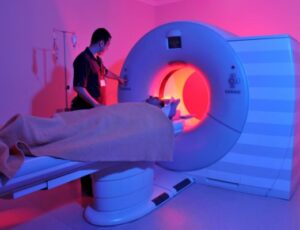
Unfortunately, the study didn’t scan the volunteers’ brains before mindfulness training, so no one can say for sure that mindfulness training was responsible for the differences.
At Massachusetts General Hospital, researchers used MRI scans to document before and after changes in the brain’s gray matter—the “processing” neurons—associated with mindfulness meditation.
The density of gray matter increased in regions governing such distinctly different activities as memory, self-awareness, and compassion, and decreased in the amygdala—the part of the brain associated with fear and stress.
We covered this intriguing research in the April issue of Harvard Women’s Health Watch.
At the moment, scientists can only speculate about the relationship between these brain changes and the health benefits associated with mindfulness meditation.
But the research adds to growing evidence that meditative practices can alter the body at a fundamental level—even, it turns out, at the level of our genes.
 Meditation elicits the “relaxation response,” a state of deep relaxation first described more than 35 years ago by mind-body pioneer Dr. Herbert Benson, currently emeritus director of the Benson-Henry Institute of Mind-Body Medicine at Massachusetts General Hospital.
Since then, Benson and his colleagues at Massachusetts General Hospital and Beth Israel Deaconess Medical Center have discovered that relaxation techniques (including meditation and yoga) turn certain sets of genes on and off in people who practice them regularly.
Benson, who is the medical editor of Stress Management: Approaches for preventing and reducing stress says these genes are involved with controlling “how the body handles free radicals, inflammation processes, and cell death.”
By: Carolyn Schatz
 Chances are when you hear hypnosis, you think swinging pocket watches and talk of, “you are now getting very sleepy.”
That’s Hollywood’s hypnosis. The real thing doesn’t put you under a spell. It doesn’t make you blackout. No one is going to convince you to cluck like a chicken upon waking.
But what it can do is calm anxiety, numb pain, induce sleep, and balance your nervous system.
If that sounds strikingly similar to meditation — well, you’re spot on. Except during hypnosis, you’re guiding the thoughts rather than letting them pass by. You are very much driving the car — but without any effort, like zoning out on your regular route home.
“Self-hypnosis, meditation, and other forms of mind-body wellness may help us bring our whole body — the immune system and the brain — into a more effective balance,” says Tampa-based therapist LindaJoy Rose, Ph.D., current director of the Natural Wellness Academy and former director for the American Board of Hypnotherapy.
And once you know the base of hypnosis you can apply it toward anything, including minimizing the constant anxiety and rumination of the current pandemic. Here’s everything you need to know:
What is hypnosis?
You might remember from Psych 101 that you have two states of mind: the conscious, which is the tip of the iceberg above water, if you will — the active, analytical, problem-solving, and worry-creating part of your awareness; and the subconscious, which holds everything just below the surface, like suppressed feelings, reflexive judgments, and underlying motivations.
These are things you don’t actively think about but could bring into conscious awareness if you needed.
Hypnosis essentially tells your consciousness to take a backseat and lets you turn your attention inward to that deeper sense of the unconscious self, according to a 2018 analysis in Psychoanalytic Review that reports the practice temporarily suspends the mind’s critical faculties.
It works like this: In the beginning, either an in-person therapist or an audio guide is leading you with their voice. Just like with meditation, you’re focused on their voice and are practicing letting go of control over your thoughts. The guidance tells you what kind of images and thoughts to become absorbed in, then how to direct that toward healing activity within.
That state is called a hypnotic trance. You are in control the whole time — one of the biggest misconceptions of hypnosis is that it’s done to you, but really, you’re guiding your thoughts, says Steven Gurgevich, Ph.D., a psychologist based in Tucson, AZ who has been teaching and practicing hypnotherapy for over 40 years.
And you’re totally aware of what’s happening the whole time. Just like how you can hear the TV making noise but not actually be listening, or stare out the window in a daydream without actually seeing what’s going on, hypnosis allows you to direct your thoughts without actually engaging your mind, Dr. Gurgevich points out.
That’s because going into a hypnotic trance changes what parts of your mind are activated.
One study out of Stanford University looked at the brains of people during guided hypnosis and found less activity in two key areas.
The dorsal anterior cingulate, which is in charge of thinking and motor control, and the dorsolateral prefrontal cortex, which points to a disconnect between someone’s actions and their awareness of their actions.
This uncoupling lets you take part in activities without bringing your consciousness into play.
 What’s more, the Stanford team found that during hypnosis, there is more connectivity between two parts of your mind that foster a stronger brain-body connection.
In a trance, your brain is processing and controlling what’s going on in the body better than normal.
Which brings us to a key point: The words you think and pictures you imagine have real power over your brain.
Studies show just hearing words associated with physical suffering actually activates the areas of your brain responsible for pain perception compared to neutral words.
Reading a list of negative words, even briefly, makes anxious and depressed people feel more of it.
Hypnosis helps reduce unwanted feelings by repeating positive thoughts so they have the opposite effect, instead of acknowledging that pain, you focus on feeling full of healing energy, happiness, and ease of movement which puts less attention on your pain receptors.
Instead of recognizing, and then thinking about, feeling anxious, you direct your subconscious on remaining calm and maintaining a balanced state.
What is hypnosis used for?
Hypnosis, visualization, and meditation are all siblings of the same family. The main difference is clinical hypnosis is used for a specific purpose — a tool to put your consciousness on standby and allow your mind to focus on some form of healing or action.
“There is less resistance by the conscious — the more ‘judgmental’ part of the psyche — so that through repetition one can change negative habits and instill positive ones,” Dr. Rose explains.
Super important fact: Your subconscious is also responsible for regulating all your bodily functions, including your lungs, heart, brain, digestion, nervous system, immune response.
That’s how your organs function without active thought. And because your subconscious is now driving the car, there seems to be a “communication highway directly to the bodily system,” Dr. Rose says.
Among other things, this allows you to reach your autonomic nervous system, calming the fight-or-flight response from stress which you might not have even known was working away.
Studies show it has real power: Practicing hypnosis regularly can help you sleep better, control cravings for bad-for-you foods, and reduce stress.
One case study out of Pakistan found adding hypnotherapy to cognitive behavioral therapy (CBT) treatment significantly sped up the improvement of depressive symptoms. Combining self-care and self-hypnosis significantly improved energy levels, sleep quality, depression, anxiety, and worry in cancer patients, reports a 2020 study in Psycho-oncology.
It’s also frequently used to alleviate all levels of pain, including for those suffering a one-time burn, regular IBS symptoms, and dying from painful diseases.
How can hypnosis boost immune system?
Perhaps most interestingly, guided imagery and relaxation techniques like hypnosis may help fortify your immune system.
According to a 2016 study analysis in the Annals of the New York Academy of Sciences, meditation alone has the power to reduce the number of certain molecules that create inflammation, boost healthy T-cell counts among sick patients, and improve activity of telomerase, a protective DNA and proteins that help healthy cells multiply.
Dr. Rose adds that there is such a thing as an over-heightened immune response, and that balancing your immune system may actually require reducing stress more than anything else, rather than just controlling it.
But being able to calm your nervous system can prevent stress from raising levels of hormones that cause inflammation. This inflammation can, in turn, set off a chain of events in the body that can make you more susceptible to catching viruses.
No, hypnosis is not going to be the medical prevention for coronavirus — but learning to relax and empower your mind can help you maintain your wellbeing, health, and immunity, Dr. Gurgevich says.
How to I try hypnosis at home
Hypnosis doesn’t work on everyone — roughly 10% of the population is too resistant to persuasion, according to Stanford researchers. But another 10% are highly impressionable and therefore ideal candidates for hypnosis.
That leaves 80 percent of people falling somewhere in the middle meaning self-hypnosis is worth a try.
 The only requirement is that you have to cast aside doubt and be open to the idea that guided visualization and thoughts really do have power, Dr. Gurgevich says.
Start with 15 minutes, three times a week
The focus of your hypnosis, anxiety, immunity, pain and personal process will influence how long your trance should be. But for the first few weeks, 15 to 20 minutes should help you get familiar with the process.
You could feel results immediately, particularly for something like pain reduction, Dr. Gurgevich says. But the real power comes from rehearsal, so the effect will always get stronger with time and frequency.
Look for guides from credentialed hypnotherapists
If you’re interested in hypnosis for a clinical issue like an anxiety disorder, you’ll see the most benefit from working directly with a licensed hypnotherapist.
But everyday stress, worries, or sleep troubles can benefit just from using guided audio. Quality still matters. Dr. Gurgevich suggests confirming the practitioner is a member of and certified by the American Society of Clinical Hypnosis or the Society for Clinical and Experimental Hypnosis, which ensures state licensure and accredited education.
Download a hypnosis app
There are tons of hypnosis videos on Youtube and recordings on Spotify, but using an app like UpNow, HelloMind or Hypnobox is a great way in for beginners.
They’re easy to navigate, you can track which recordings you’ve already tried and like, and it will usually nudge you with reminders if you haven’t logged on in a few days.
By: Rachael Schultz

 The intervention is called mindful hypnotherapy. “Mindfulness is a type of meditation that involves focusing attention on present moment awareness.
It can help people cope with stress, but can require months of practice and training,” said researcher Gary Elkins, Ph.D., director of the Mind-Body Medicine Research Laboratory at Baylor University.
“Hypnosis also involves focusing attention, but it includes mental imagery, relaxation and suggestions for symptom reduction.”
Hypnosis interventions are typically brief and have been used in pain and symptom management in clinical practice. The study’s basic premise is that using hypnosis to deliver mindfulness goals could have many advantages, Elkins said.
“Combining mindfulness and hypnotherapy in a single session is a novel intervention that may be equal to or better than existing treatments, with the advantage of being more time-effective, less daunting and easier to use,” he said. “This could be a valuable option for treating anxiety and stress reduction.”
As a brief intervention, mindful therapy could be widely disseminated and is an innovative new mind-body therapy. The study is published in the International Journal of Clinical and Experimental Hypnosis.
Elkins noted that while mindfulness by itself can be an effective treatment for stress and anxiety for some people, it typically is provided in eight weekly sessions that last two hours or more each week and include an all-day retreat of eight or more hours.
That amount of time, more than 24 therapy hours, may be a burden in cost and time for some people. Also, research has not shown that mindfulness-based treatments are consistently superior to standard cognitive behavioral therapy, he said.
For the study of mindful hypnotherapy, the Baylor research team recruited 42 individuals with self-reported high stress. Half took part in an intervention of one-hour weekly individual sessions that included hypnosis inductions and suggestions for greater mindfulness.
Participants also were given self-hypnosis audio recordings lasting about 20 minutes, each with suggestions for a hypnotic induction, relaxation and greater mindfulness.
The second group did not take part in the intervention. Intervention material focused on present-moment awareness, nonjudgmental awareness of the five senses, nonjudgmental awareness of thoughts and feelings, self-hypnosis, compassion for self and others, awareness of personal values and meaning in life and transition to long-term practice of mindful hypnotherapy, Elkins said.
 At study’s end, the intervention group reported a large decrease in stress and a significant increase in mindfulness. Most were highly satisfied with the number of sessions, the ease of home practice and the clarity of content, Elkins said.
The average participant practiced almost every day, and overall satisfaction with the intervention was 8.9 on a scale of 10.
In comparison, those who did not participate in the intervention reported no significant difference between pre- and post-study stress level. A limitation of the study was its small sample size, Elkins said.
Future studies of a larger number of people could be of value, as well as testing mindful hypnotherapy for such concerns as anxiety, depression or chronic pain, he said.